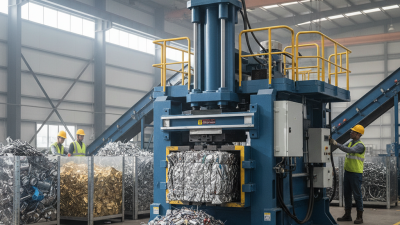
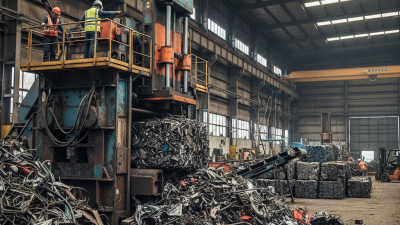
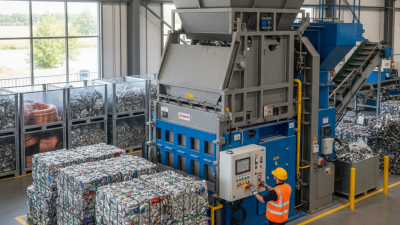
Choosing the best Steel Baling Machine starts with the material, not the catalogue photograph. Steel scrap varies widely, from thin automotive sheets to heavy beams, cans, and production offcuts. Each type demands different chamber dimensions, compression force, cycle speed, and feeding methods. A machine that handles light sheet efficiently may struggle with dense structural steel. That mismatch can increase electricity use, maintenance costs, and operator risk.
Industry data shows why this decision matters. World Steel Association statistics recorded approximately 1.89 billion tonnes of crude steel production in 2023. Steel recycling remains essential because recycled steel can re-enter production without losing its material properties. The U.S. Environmental Protection Agency reported an 86% recycling rate for steel cans in 2018, although newer data should be checked before making current claims. These figures suggest strong recovery demand, but they do not identify one universal baler. Site conditions still matter.
Joe Pickard, former chief economist at the Institute of Scrap Recycling Industries, described recycling simply: “Recycling is a manufacturing process.” That principle applies directly here. The right Steel Baling Machine should create consistent bales, fit the available floor space, and support reliable downstream handling. Consider bale density, wire or strap systems, hydraulic pressure, noise, safety controls, and service access. Do not trust impressive throughput figures alone. Real performance depends on trained operators, material preparation, and regular maintenance. This guide compares those practical factors, while acknowledging one uncomfortable truth: the cheapest machine may become the most expensive choice.
A steel baling machine compresses loose steel scrap into dense, tied bundles. It uses a hydraulic system, a chamber, a lid, and a discharge mechanism. Some models include shear blades, while others require pre-cut material. That difference matters.
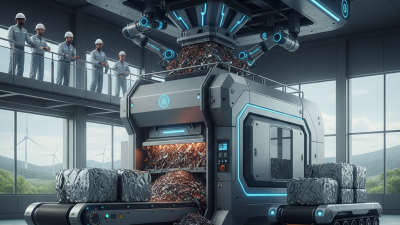
An operator loads sorted scrap into the chamber. The lid closes, and hydraulic cylinders drive a compression plate forward. Pressure forces the metal against the chamber walls, reducing its volume. When the bale reaches the selected size, the machine releases it through a front, side, or tilting outlet. Binding wire or straps may secure the bundle, depending on the system. The cycle then repeats.
Keep hands clear.
In practice, selecting the best machine starts with the material, not its appearance. Record the steel type, average piece size, moisture, contamination, and hourly volume. A qualified technician should verify pressure requirements, chamber dimensions, motor capacity, and floor strength. Ask about guarding, emergency stops, maintenance access, and documented test results. These details reveal more than a high production claim. A compact machine may suit a small yard, while heavy mixed scrap can overload it. I have seen output estimates fail when operators ignored feeding time and bale changes. That lesson is easy to miss. Allow realistic pauses, train staff, and inspect hoses, seals, and electrical controls regularly.
How to Choose the Best Steel Baling Machine?
A practical comparison begins with the material, not the machine’s advertised tonnage. Vertical balers suit smaller spaces and moderate volumes. Horizontal balers handle continuous production and larger feed streams. Two-ram systems may improve bale consistency when materials vary. However, the best choice depends on your daily workflow, available floor space, and loading method.
Compare capacity using real operating data. Check chamber size, bale weight, cycle time, and hourly throughput. A machine rated for 500 kilograms per hour may achieve less with wet, tangled, or uneven material. Ask for test results using material similar to yours. Bale density also matters because denser bales reduce storage and transport requirements. Performance is more than speed. Inspect motor power, hydraulic stability, tying time, noise, and access for maintenance. Small design details matter.
Tips: Record one week of material volume before choosing equipment. Leave room for peak days. Test several bale sizes if your storage space is limited. Review service access, spare-part availability, and operator training requirements. Do not compare capacity alone. A fast cycle can become expensive if it creates frequent jams or difficult maintenance. One imperfect assumption can distort the entire purchase decision. Recheck your measurements.
Comparing Machine Types, Capacity, and Performance
The chart compares typical throughput levels for major steel baler configurations. Values are representative midpoint estimates from commonly specified operating ranges: vertical balers typically process about 0.2–1.5 t/h, semi-automatic horizontal balers about 1–4 t/h, fully automatic horizontal balers about 5–15 t/h, and two-ram balers about 10–30 t/h.
Higher throughput generally requires greater investment, floor space, hydraulic power, and automation. Final selection should also consider feedstock size, required bale density, duty cycle, labor availability, and safety requirements.
Choosing the best steel baling machine requires careful attention to safety, maintenance, and automation.
Safety should never depend on operator habits alone. OSHA 29 CFR 1910.212 requires guarding around dangerous machine parts and operating points. Look for interlocked doors, emergency stops, two-hand controls, and clear lockout points. ISO 12100 also recommends designing hazards out before relying on warning labels. Ask for documented risk assessments and functional safety validation. A painted guard is not enough.
Maintenance features can prevent small hydraulic leaks from becoming expensive failures.
Choose a machine with accessible filters, visible pressure gauges, and diagnostic codes. Automatic lubrication can reduce missed service intervals, but it still needs inspection. In practice, sensors become dirty, cables loosen, and software alarms may be ignored.
The International Federation of Robotics reported 541,302 industrial robots were installed worldwide in 2023. This growth shows automation’s value, but it does not guarantee safer production.
Useful automation includes bale-density monitoring, jam detection, cycle counting, temperature alerts, and remote fault records. These functions should support trained workers, not replace them.
A maintenance log should record oil changes, seal inspections, guard tests, and abnormal noise. Reviewing those details monthly often reveals problems before production stops.
How to Choose the Best Steel Baling Machine?
Cost evaluation should begin with total ownership, not the purchase price. Compare cycle time, power use, bale density, labor needs, and maintenance intervals. A cheaper machine may consume more electricity or require frequent hydraulic repairs. Ask for measured output using your steel grade, not generic sales figures. World Steel Association data reports 1.892 billion tonnes of crude steel production in 2023, showing the scale of material handled worldwide. Even small efficiency losses can become expensive at high volumes.
Quality appears in practical details. Inspect welds, hydraulic fittings, chamber alignment, safety guards, and control-panel protection. Request factory acceptance test records, noise readings, and documented pressure tests. ISO 9001 certification can support process control, but it cannot guarantee machine performance. The ISO Survey 2023 recorded more than 1.26 million ISO 9001 certificates worldwide. That number is useful context, not proof.
Supplier reliability needs harder evidence. Check spare-parts availability, technician response times, training, and warranty exclusions. Ask for references from facilities processing similar steel thicknesses. A reliable supplier should explain expected downtime honestly. That matters. Review service contracts carefully. Some quotations hide installation, freight, software updates, or commissioning costs. I would also request a live production trial before signing. My own practical bias is simple: documented performance beats polished brochures, although documentation can still be incomplete. Evaluate the machine, the people, and the support after delivery.
Use the following practical comparison framework to evaluate steel baling machines. The figures are typical market ranges for hydraulic machines handling steel scrap; actual performance depends on scrap density, material shape, feeding method, bale dimensions, local electrical standards, and operating conditions.
| Evaluation Dimension | Why It Matters | Typical Target or Market Range | How to Verify Before Purchase | Suggested Weight | Evaluation Score |
|---|---|---|---|---|---|
| 1. Technical Performance | |||||
| Bale Density and Shape | Dense, uniform bales reduce storage volume, improve transport efficiency, and make downstream melting or handling easier. | Approximately 1.5–2.5 t/m³ for many ferrous scrap applications, depending on the material and compression chamber. | Request test bales made from your own scrap. Measure bale dimensions, weight, density, surface stability, and resistance to spring-back. | 15% | __/15 |
| Nominal Press Force | Press force affects the machine’s ability to compress thick, irregular, or mixed steel scrap without excessive jams or cycle delays. | Approximately 630–2,000 tonnes for common industrial ferrous scrap balers. Higher force is not automatically better if the feedstock is light or easy to compress. | Compare the rated main-cylinder force, chamber size, material limits, and actual test results. Confirm whether the stated value is nominal or maximum force. | 10% | __/10 |
| Throughput | Throughput determines whether the machine can meet daily production targets without excessive overtime or queuing. | Roughly 2–20 t/h for many hydraulic steel baling systems; actual output changes significantly with scrap type, loading method, and operator skill. | Ask for a guaranteed throughput range based on your specific material. Check whether the figure includes loading, tying, discharge, and downtime. | 12% | __/12 |
| Cycle Time | Shorter cycles can increase productivity, but speed must not compromise bale quality, hydraulic temperature, or component life. | Approximately 30–120 seconds per compression cycle for many industrial designs, excluding variable loading and tying time. | Observe a complete production cycle under load. Review hydraulic flow, return-stroke time, and whether the supplier quotes an unloaded cycle. | 8% | __/8 |
| Bale Size Flexibility | Adjustable bale dimensions help the machine serve different buyers, transport requirements, and scrap grades. | Common chamber widths: approximately 600–1,200 mm, with several selectable bale lengths depending on the model. | Confirm available chamber sizes, adjustable length settings, mould or liner replacement procedures, and compatibility with your handling equipment. | 6% | __/6 |
| Electrical and Hydraulic Efficiency | Energy consumption and hydraulic heat generation influence operating cost, production stability, and maintenance frequency. | Approximately 30–160 kW installed motor power for many medium-to-heavy hydraulic systems, depending on press force and configuration. | Request rated motor power, estimated kWh per tonne, pump type, oil-tank capacity, cooling method, and electrical requirements for your site. | 7% | __/7 |
| 2. Build Quality and Safety | |||||
| Frame and Chamber Construction | Heavy-duty construction reduces deformation, fatigue damage, and downtime when processing sharp or contaminated steel scrap. | Welded structural-steel frame with replaceable wear liners is a common industrial design approach. | Inspect weld quality, steel plate specifications, stress-relief procedures, chamber liners, cutting edges, and access to wear components. | 9% | __/9 |
| Hydraulic System Quality | Hydraulic components directly affect force consistency, cycle stability, leakage risk, and repair cost. | Industrial pumps, valves, cylinders, filtration, and pressure protection sized for continuous duty and the rated press force. | Check component specifications, filtration stages, hose protection, pressure-relief settings, cylinder sealing, and availability of replacement parts. | 8% | __/8 |
| Safety Systems | Interlocks and emergency controls protect operators from crushing, shearing, unexpected movement, and unsafe access. | Guarding, emergency stops, access-door interlocks, overload protection, and clear operating controls should be provided. | Review the risk assessment, safety circuit design, emergency-stop locations, guarding layout, operator instructions, and applicable local requirements. | 10% | __/10 |
| 3. Total Cost of Ownership | |||||
| Purchase Price | The initial price is important, but a lower quotation may exclude installation, tooling, freight, controls, or required safety options. | Indicative industrial range: approximately USD 30,000–250,000+, depending on press force, automation, chamber size, and configuration. | Compare itemized quotations using the same scope: machine, controls, tooling, spare parts, delivery, installation, commissioning, and operator training. | 5% | __/5 |
| Operating Cost | Electricity, hydraulic oil, consumables, labor, and planned maintenance often have a greater long-term impact than the purchase price. | Evaluate cost per tonne rather than only hourly cost; include energy, labor, wire or strapping, oil, wear parts, and scheduled service. | Request a five-year cost-of-ownership estimate using your expected annual tonnage and local electricity and labor rates. | 5% | __/5 |
| Maintenance and Spare Parts | Fast access to wear parts and clear maintenance procedures can substantially reduce unplanned downtime. | Routine checks: daily or per shift; hydraulic oil and filter service: according to operating hours and oil condition. | Obtain a spare-parts list, recommended stock levels, maintenance schedule, part numbers, lead times, warranty coverage, and service instructions. | 5% | __/5 |
| 4. Supplier Reliability | |||||
| Relevant Experience | Experience with comparable steel scrap, production volumes, and site conditions lowers commissioning and application risks. | Prefer documented installations with similar material, press force, throughput, and operating hours. | Ask for anonymized case data, reference contacts where permitted, test reports, commissioning records, and evidence of repeat orders. | 4% | __/4 |
| Documentation and Transparency | Complete technical documentation makes installation, operation, maintenance, inspection, and troubleshooting more reliable. | Clear specifications, drawings, manuals, wiring diagrams, hydraulic schematics, certificates, and acceptance criteria. | Check that all documents identify the delivered configuration and include measurable performance guarantees rather than broad marketing claims. | 3% | __/3 |
| Warranty and After-Sales Support | Responsive technical support protects production continuity when commissioning issues or component failures occur. | Written warranty terms with defined coverage, exclusions, response times, remote support, and service escalation procedures. | Confirm warranty duration, labor and freight responsibilities, remote diagnostics, technician availability, training, and spare-parts logistics. | 3% | __/3 |

Scoring method: Assign each machine a score for every row, then multiply the result by the suggested weight. Give priority to verified test results, safety compliance, lifecycle cost, and service capability rather than purchase price alone. Recommended decision rule: select the machine with the strongest verified total value for your material and operating conditions.