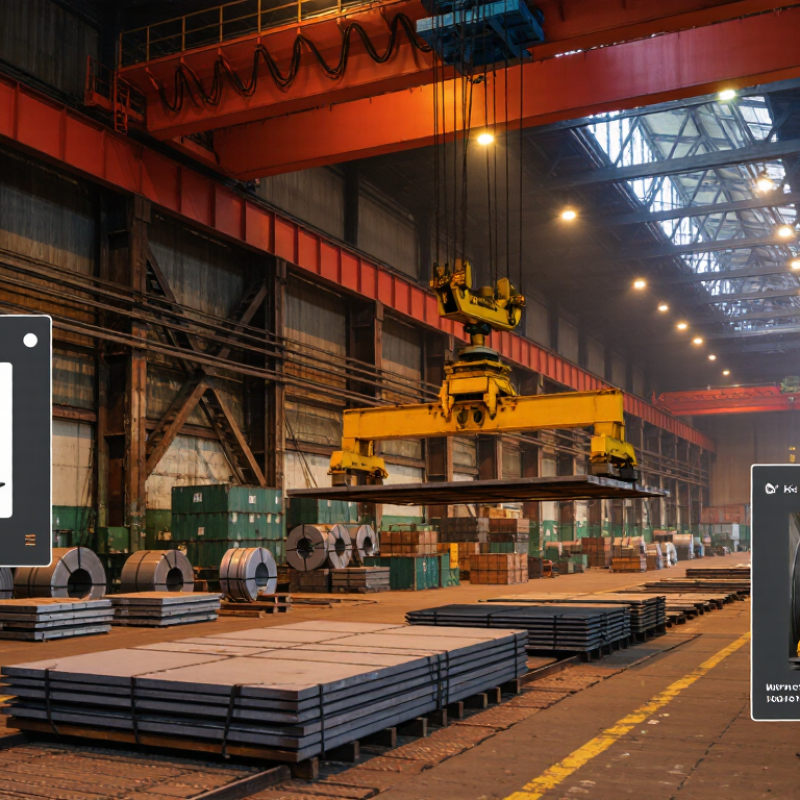
Steel handling is a demanding test of lifting technology. The World Steel Association reported approximately 1.89 billion tonnes of crude steel production worldwide in 2023. That scale explains why reliable lifting equipment matters across mills, service centers, ports, and fabrication shops. An Electromagnetic Lifter can move thick plates, billets, coils, and scrap without chains or slings. It can also reduce attachment time around hot, sharp, or uneven loads.
But magnetic strength alone does not define a safe or useful machine. Load shape, surface temperature, steel grade, plate thickness, air gaps, and power reliability all affect performance. OSHA’s overhead-crane rules and ASME B30.20 emphasize rated capacity, inspection, controls, and below-the-hook safety. The selection process in this guide considers those practical requirements, along with lifting capacity, battery endurance, control design, emergency protection, and manufacturer support. Product specifications were compared carefully, not accepted at face value.
Real work is less tidy than a catalog photograph.
A strong magnet may perform poorly on thin, rusty, or curved steel. Operators may also underestimate residual magnetism and uneven loading. The following ten models represent notable options for different handling conditions, but no single lifter suits every facility. Buyers should verify test data, independent certification, warranty terms, and local workplace requirements before purchase. This guide aims to support a disciplined decision, while acknowledging that field trials often reveal details that brochures miss.
Electromagnetic lifters use energized coils to create a magnetic field that attracts ferrous steel. The field passes through the lifter’s contact face and into the load. Steel plates, bars, pipes, and cast components can then move without slings or clamps. Simple in principle.
Their real performance depends on contact quality. Rust, paint, scale, moisture, and air gaps weaken magnetic force. Thin plate can also provide less holding strength than a thick block. Load shape matters. A curved surface may touch only along a narrow line, creating an unstable lift. Rated capacity is not a universal promise; operators must check material thickness, surface condition, temperature, and the lifter’s approved working limits.
Power loss protection is essential during handling. A suitable system should provide a warning, backup holding method, or controlled lowering procedure. Operators should inspect cables, controls, contact faces, and lifting eyes before every shift. They should center the lifter over the load and raise it slowly, watching for tilting or sliding. Never lift people or stand beneath suspended steel. That seems obvious, yet hurried workshops still overlook it. In practical steel handling, electromagnetic lifters can improve speed and reduce manual contact, but they are not effortless tools. I would also question any capacity chart used without a site-specific trial, especially when surfaces are rough or loads are unusually thin.
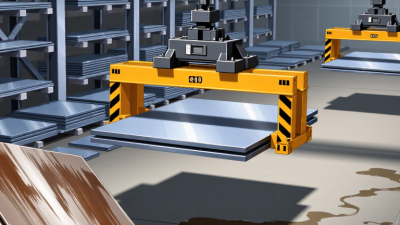
Choosing among the 10 best electromagnetic lifters for steel handling requires more than comparing headline capacity. The World Steel Association reported 1.892 billion tonnes of crude steel production in 2023. That volume highlights the need for dependable lifting controls. Check the rated working load limit, steel thickness range, air-gap tolerance, and surface condition. A thin plate with rust, scale, or paint may lift far less than a clean test sample. Capacity charts matter more than marketing numbers.
Battery runtime and duty cycle also deserve close attention. A lifter used beside a furnace needs heat resistance, protected controls, and predictable charging time. ASME B30.20-2021 addresses below-the-hook lifting devices, including marking, inspection, testing, and operating practices. Use its requirements with site procedures. Confirm the safety factor, residual holding force, emergency release behavior, and alarm visibility. Small details prevent large problems.
Tips: Test the actual steel grade and thickness before purchase. Measure the air gap after cleaning the contact face. Never judge performance from one perfect lift. Recheck capacity during cold starts and low-battery conditions. I would also record each inspection, although busy teams often skip this step. That weakness deserves attention. A strong specification sheet is useful, but verified field performance remains the better decision tool.
This chart compares ten common nominal capacity classes used for industrial electromagnetic lifters. Actual safe working load depends on steel thickness, surface condition, air gap, material shape, lifting orientation, magnetic flux density, battery condition, and the manufacturer's safety factor. Higher-capacity lifters are generally selected for heavy plate, billets, blocks, and fabricated steel handling.
The ten leading electromagnetic lifters for steel handling are flat-plate, round-plate, rectangular, coil, beam, rail, scrap, battery-powered, electro-permanent, and custom-profile units. Each suits a different load shape. Flat plates support sheets, while coil lifters grip circular steel rolls. Scrap models tolerate irregular piles better. Electro-permanent units can reduce energy use during holding, but they still require disciplined inspection.
Global demand explains their importance. The World Steel Association reported approximately 1.89 billion tonnes of crude steel production in 2023, in World Steel in Figures 2024. That volume creates constant pressure for safer, faster movement. The U.S. Bureau of Labor Statistics recorded 1,069 fatal work injuries in transportation and material-moving occupations during 2023. The figure is broader than magnet operations, yet it highlights the human cost of weak lifting controls. A perfect ranking is impossible. Load geometry, surface condition, air gaps, and temperature can change real capacity sharply.
Tips: Select capacity from the manufacturer’s tested rating, not appearance. Check the load chart before every shift. Remove scale, oil, and heavy rust from contact surfaces. Confirm battery condition on portable units. ASME B30.20 supports inspection and marking practices for below-the-hook lifting devices. Operators should also record defects, unusual sliding, and failed contact points. A magnet that worked yesterday may be unsafe today. That uncomfortable possibility deserves attention.
10 Best Electromagnetic Lifters for Steel Handling
Choosing among the 10 best electromagnetic lifters requires more than comparing lifting capacity. Safety features should guide every decision. A reliable lifter needs overload protection, a visible warning alarm, and a secure control system. Battery backup is valuable because power loss can release a suspended load. The rated capacity must match the steel’s thickness, surface condition, and shape. Always inspect the lifting face, cables, hooks, and controls before each shift.
Tips: Keep the contact surface clean and flat. Center the magnet before energizing it. Confirm full magnetic contact. Never stand beneath a suspended load. Mark exclusion zones clearly, even in quiet workshops. Operators should wear suitable helmets, gloves, safety footwear, and eye protection. Training must include emergency release procedures and load-control practice.
Operating requirements are equally important. Use the lifter only on approved ferrous materials, and follow the manufacturer’s capacity chart for every lift. Long, flexible plates may need additional controls to prevent swinging or bending. Sudden travel can create dangerous momentum. Move slowly, keep the load close to the floor, and use tag lines when appropriate. Field experience shows that rushed inspections cause many preventable mistakes. I would not rely on a warning light alone; verify the load manually through the approved test procedure. Conditions change, and steel dust can hide defects. Regular documented inspections, competent supervision, and clear communication remain essential.
| Rank | Lifter Configuration | Typical Rated Capacity | Recommended Steel Load | Typical Minimum Thickness | Operating Mode | Key Safety Features | Essential Operating Requirements | Best-Suited Application |
|---|---|---|---|---|---|---|---|---|
| 1 | Battery-Powered Lifting Magnet | 250–2,000 kg | Flat carbon-steel plates, blocks, and fabricated parts | Approximately 6–12 mm, depending on magnet size and air gap | Self-contained DC electromagnet with rechargeable battery | Battery condition indicator, audible low-voltage alarm, magnetic holding monitor, emergency release protection, and lifting-eye safety latch | Charge the battery before use; inspect cables and contact surfaces; keep the load centered; do not exceed the rated capacity or permitted duty cycle | Steel service centers, fabrication shops, and locations without convenient electrical power |
| 2 | AC-Powered Electromagnetic Lifter | 500–5,000 kg | Large flat steel plates and securely supported fabricated components | Approximately 8–20 mm | Continuous mains-powered electromagnetic operation | Power-loss alarm, electrical overload protection, thermal protection, grounded enclosure, and emergency stop circuit | Use the specified voltage and frequency; provide proper grounding; protect the power cable from crushing, heat, and sharp edges | Indoor plate handling with a stable electrical supply and frequent lifting cycles |
| 3 | Electro-Permanent Magnetic Lifter | 300–3,000 kg | Flat and moderately rough steel plates, billets, and blocks | Approximately 5–15 mm | Electrical pulse for magnetizing and demagnetizing; permanent holding force during transfer | Fail-safe holding during power interruption, lockable control, load-status indicator, and controlled demagnetization | Verify that the workpiece is ferromagnetic; clean the contact area; allow the specified magnetizing and demagnetizing cycle to complete | Applications where power-loss protection and reduced continuous power consumption are important |
| 4 | Heavy-Duty Deep-Penetration Electromagnet | 2,000–10,000 kg | Thick plates, steel slabs, blooms, and heavy blocks | Approximately 20–50 mm | High-power DC electromagnetic lifting | Independent magnetic-circuit monitoring, thermal sensors, overload protection, reinforced lifting eye, and emergency power backup where specified | Use only with cranes of adequate capacity; ensure full pole contact; maintain required cooling intervals and inspect the lifting structure regularly | Steel mills, heavy fabrication, foundries, and primary metal handling |
| 5 | Multi-Pole Plate Magnet | 500–4,000 kg | Long, thin, or flexible steel plates | Approximately 6–15 mm | Multiple magnetic poles distributed along a rectangular face | Multiple lifting points, pole-contact indicators, overload monitoring, anti-swing connection, and guarded controls | Position the magnet parallel to the plate; use the recommended number of magnets for long loads; control deflection and load swing | Moving sheet, plate, and cut-to-length steel stock with improved load stability |
| 6 | Beam and Structural-Steel Electromagnet | 1,000–6,000 kg | I-beams, channels, angles, rails, and other long sections | Approximately 8–20 mm at the contact surface | DC electromagnet with a shaped or segmented pole face | Load-position indicator, anti-rotation connection, secondary retention provision, power-loss alarm, and mechanical lifting-eye inspection point | Confirm that the pole face matches the profile; balance the load before lifting; use tag lines where required and avoid side loading | Structural-steel storage yards, fabrication lines, and rail handling |
| 7 | Coil and Round-Stock Electromagnetic Lifter | 500–5,000 kg | Steel coils, round bars, pipes, and cylindrical components | Contact geometry dependent; commonly 10 mm or greater | Curved or segmented magnetic pole arrangement | Contoured pole shoes, load-centering guides, holding-force monitor, emergency release control, and anti-roll features | Match the pole profile to the load diameter; prevent rolling; verify coil width and weight distribution; never lift damaged or unstable coils | Coil-processing areas, tube mills, and round-stock storage operations |
| 8 | Compact Workshop Electromagnetic Lifter | 100–500 kg | Small steel plates, tools, molds, and machined parts | Approximately 3–8 mm | Compact DC electromagnet with pendant or local control | Two-step energizing control, visual status light, overload protection, insulated handle, and mechanical lifting-eye protection | Use on clean, flat, rust-free contact areas; maintain the specified air gap; do not use for shock loading or personnel lifting | Machine shops, maintenance departments, and light fabrication workstations |
| 9 | Crane-Mounted Tandem Electromagnet System | 3,000–15,000 kg | Extra-long plates, beams, and multiple steel components | Approximately 8–20 mm per contact area | Two or more synchronized electromagnetic lifters on a spreader beam | Independent magnet monitoring, synchronized controls, load-balance display, emergency stop, backup power, and anti-sway arrangement | Confirm the combined center of gravity; inspect all magnets and beam connections; use a trained signal person and follow the approved lift plan | Long-load handling where one magnet cannot provide sufficient stability or coverage |
| 10 | Automated Electromagnetic Transfer Magnet | 500–8,000 kg | Repetitive movement of plates, blanks, slabs, and sorted steel parts | Approximately 6–25 mm | PLC-controlled electromagnetic lifting integrated with a crane, gantry, or robotic system | Interlocked guarding, position sensors, load-present verification, fault logging, emergency stop, power-loss response, and restricted-access controls | Validate the control logic; maintain safety-rated circuits; use guarding and exclusion zones; perform scheduled sensor and magnet tests | High-throughput steel processing, sorting, and automated production lines |
Selecting the right electromagnetic lifter depends on the load, surface condition, and working environment. A lifter rated for 1,000 kilograms may handle less on thin plate or uneven steel. Air gaps from rust, paint, scale, or dirt reduce magnetic holding force. Measure the actual material thickness before choosing equipment. Flat plates need different contact geometry than round bars, pipes, or stacked sheets. The lifting capacity must exceed the real load, not merely match it.
Tips: Check the manufacturer’s capacity chart for each steel shape and thickness. Inspect the contact face before every shift. Keep the lifting surface clean and dry. For repeated moves, compare duty cycle, control response, battery life, and heat resistance. Confirm that operators can see the load path clearly. A qualified lifting engineer should review unusual loads or high-temperature applications.
A practical mistake is trusting a single capacity number. It looks precise, but conditions change quickly. A slight tilt can create a dangerous gap. Thin sheets may flex during lifting, even when their total weight seems acceptable. Test the lifter with a controlled, low-height lift before production use. Record results, including surface condition and load behavior. This evidence supports safer selection and reveals weaknesses that catalog figures cannot show. Reliability comes from matching equipment to real handling conditions, then checking that choice continuously.