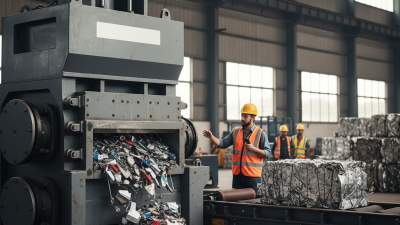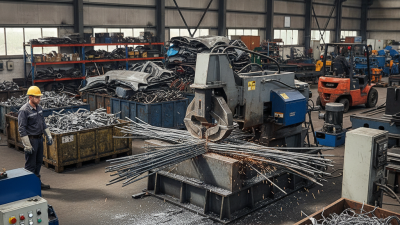
Alligator Shear Parts are the working components behind one of the scrap-processing industry’s most recognizable machines. Blades, blade holders, spacers, pins, hydraulic cylinders, guides, and wear plates must work together under extreme pressure. When a blade cuts a thick steel beam, force travels through every connection. A small gap can become a costly failure.
The need for reliable parts is substantial. The Institute of Scrap Recycling Industries reports that the U.S. recycling industry processes more than 130 million metric tons of material each year and supports over 500,000 jobs (ISRI, 2023). That scale explains why maintenance decisions cannot depend only on purchase price. In practice, operators inspect cutting edges, measure wear, check hydraulic leakage, and compare parts against the manufacturer’s tolerances. The workshop floor often tells the truth.
Joe Pickard, ISRI’s chief economist, has described recycling as “a critical part of the circular economy.” His statement places Alligator Shear Parts within a wider industrial responsibility. Durable components reduce unplanned downtime, material waste, and repeated replacements. Yet the picture is not perfect. Published market reports often group all scrap machinery together, hiding data specific to alligator shears. This limitation deserves attention. A careful buyer should verify steel grade, heat treatment, dimensions, compatibility, and supplier traceability before ordering. The following guide explains what these parts do, how they interact, and why their condition directly affects cutting accuracy, safety, and operating cost.
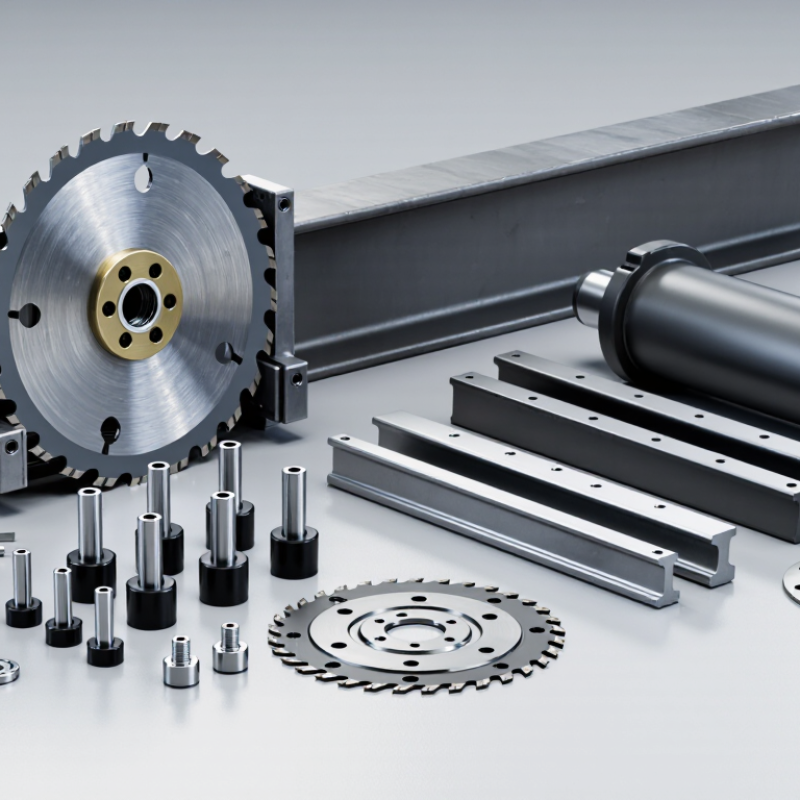
Alligator shear parts are the working components that cut metal through a hinged, guillotine-style jaw. The main frame supports the machine and absorbs cutting force. A pivot pin connects the upper jaw to the fixed lower section. Hardened blades sit along these edges. They must remain aligned, because even a small gap can leave rough cuts or overload the drive system.
A hydraulic cylinder usually opens and closes the upper jaw. Hydraulic pressure pushes the piston rod, creating the force needed to cut bars, plates, pipes, or scrap sections. Hoses, seals, valves, and a pump control this movement. Some models use mechanical drives instead. A hold-down device keeps material from shifting, while guards protect operators from moving parts and sharp fragments. The control panel manages starting, stopping, and jaw movement.
Maintenance depends on the part, not just the machine’s age. Technicians commonly inspect blade edges, pivot wear, cylinder leaks, loose fasteners, and unusual vibration. Clean lubrication points help, but excess grease can attract abrasive metal dust. Blade replacement also requires correct torque and alignment. The ideal adjustment is not always obvious. A cut may look acceptable while hidden wear increases energy use. Measuring blade clearance and checking hydraulic pressure provides better evidence than relying on sound alone. Small details matter.
An alligator shear uses a fixed blade, a moving jaw, a pivot, and a hydraulic cylinder. The cylinder pushes the moving jaw toward the fixed blade, creating a shearing action that cuts metal stock.
The values are calculated using the hydraulic-force formula F = P × A at 250 bar, where A is the cylinder piston area. A larger bore produces more push force, but the actual cutting force also depends on blade geometry, jaw leverage, material strength, friction, and hydraulic losses.
An alligator shear uses a fixed lower jaw and a moving upper jaw. The lower jaw supports the metal during cutting. The upper jaw rotates around a heavy pivot pin. A hydraulic cylinder pushes this jaw downward, creating a powerful shearing action. Replaceable blades sit along both jaw edges. Their alignment matters because uneven clearance can produce rough cuts, excess force, and faster wear.
The frame carries the cutting load. Reinforced side plates keep the jaws aligned under pressure. Bushings or bearings guide the pivot movement. Hydraulic hoses deliver fluid to the cylinder, while a control valve manages opening and closing speed. The arrangement is simple, but not forgiving. A slightly loose pivot can change blade contact. That detail is easy to miss.
The World Steel Association’s World Steel in Figures 2024 reports about 1.89 billion tonnes of crude steel production in 2023. Its industry data also indicates that more than 650 million tonnes of steel are recycled yearly. This volume explains why shear frames need durable joints and serviceable blades.
Tips: Check blade clearance before cutting mixed scrap. Inspect pivot pins for scoring and side movement. Keep hydraulic fittings clean. Never assume a slow jaw means a damaged cylinder; contaminated fluid may be the real cause. Maintenance records help, although operators sometimes record too little detail.
An alligator shear uses a rigid frame, pivot pin, upper blade, lower blade, and hydraulic cylinder. These parts coordinate during each cutting cycle. The lower blade supports the material while the upper blade swings downward around the pivot. Hydraulic pressure drives the cylinder, converting fluid force into controlled blade movement. As the upper edge meets the workpiece, pressure concentrates along a narrow cutting line. The metal bends slightly, then separates when the shear force exceeds its strength. The cut may look simple, but alignment matters greatly.
A typical cycle begins when the operator positions material against the lower blade. The hold-down area, where fitted, helps prevent sudden movement. The cylinder then extends, lowering the upper blade through the material. After separation, the cylinder retracts and raises the blade for the next cycle. In practice, the motion is rarely perfectly smooth. Worn pivot bushings, dull edges, or uneven hydraulic pressure can cause angled cuts, vibration, or incomplete separation. Maintenance records and visual inspections help identify these problems early. Small gaps can create large quality issues.
Keep blades sharp and check their clearance regularly. Remove loose fragments before loading new material. Listen for unusual knocking sounds. They often indicate wear. Never judge hydraulic pressure by sound alone; verify it with suitable gauges and maintenance procedures. A slower cycle is sometimes safer and more consistent, although this depends on material thickness and machine settings.
An alligator shear uses a rigid frame, fixed blade, moving blade, pivot pin, and hydraulic cylinder. The cylinder supplies the cutting motion. A pump sends pressurized oil through control valves and hoses. Oil enters one side of the cylinder, pushing the piston and attached blade forward. Reversing the valve retracts the blade.
Hydraulic pressure controls cutting force. Oil flow controls blade speed. A 100-millimeter cylinder at 200 bar can theoretically produce about 157 kilonewtons of force. That equals roughly 16 tonnes under ideal conditions. Real machines deliver less. Seal friction, oil temperature, and worn pins reduce performance.
The system needs more than a powerful pump. A relief valve limits dangerous pressure. Filters protect the pump and valve passages. The reservoir allows heat and air separation. Poor alignment can leave shiny marks on one blade edge, showing uneven loading. That detail is easy to miss.
The U.S. Geological Survey’s Mineral Commodity Summaries 2024 reported about 69 million metric tons of ferrous scrap recycled in the United States during 2023. The World Steel Association recorded approximately 1.89 billion tonnes of global crude steel production in 2023. These figures show why dependable scrap-processing equipment matters. Still, maintenance decisions should follow measured pressure, flow, temperature, and blade clearance, not assumptions.
Alligator shear parts convert hydraulic force into controlled cutting. The main assembly includes a fixed blade, moving blade, pivot pins, hydraulic cylinder, jaw, wear plates, hoses, and filters. When pressurized oil enters the cylinder, the piston drives the upper jaw through a short, powerful stroke. This action cuts steel, copper, cable, and other recoverable materials. World Steel Association’s 2024 sustainability data reports roughly 680 million tonnes of steel recycled annually. Reliable shearing equipment supports this large processing stream.
Applications range from scrap yards to demolition sites and fabrication workshops. Operators process beams, pipes, rebar, and mixed metal bundles. Maintenance should begin with a clean inspection. Check blade clearance, pin wear, hydraulic leaks, hose abrasion, and loose fasteners before each shift. Replace damaged blades early. A rounded edge increases force, heat, and energy use. Follow the service schedule and hydraulic guidance in the equipment manual. ISO 4413 principles also emphasize safe hydraulic energy control. Part replacement becomes urgent when cracks, uneven cuts, abnormal vibration, or repeated pressure loss appear. A small leak is not always small.
Tips: Keep spare seals, pins, filters, and blade bolts in labeled storage. Record operating hours and replacement dates. Use calibrated tools for critical fasteners. Never inspect a pressurized system by hand. Lock out stored hydraulic energy first. In practice, maintenance records are often incomplete, which makes failure patterns difficult to judge. That weakness deserves attention. A simple checklist can prevent missed wear, but it cannot replace trained inspection.