How to Choose the Right Scrap Metal Balers for Your Recycling Business?
Choosing the right scrap metal balers is crucial for a successful recycling business. These machines play a key role in processing scrap effectively. The right baler can significantly improve productivity and reduce operational costs.
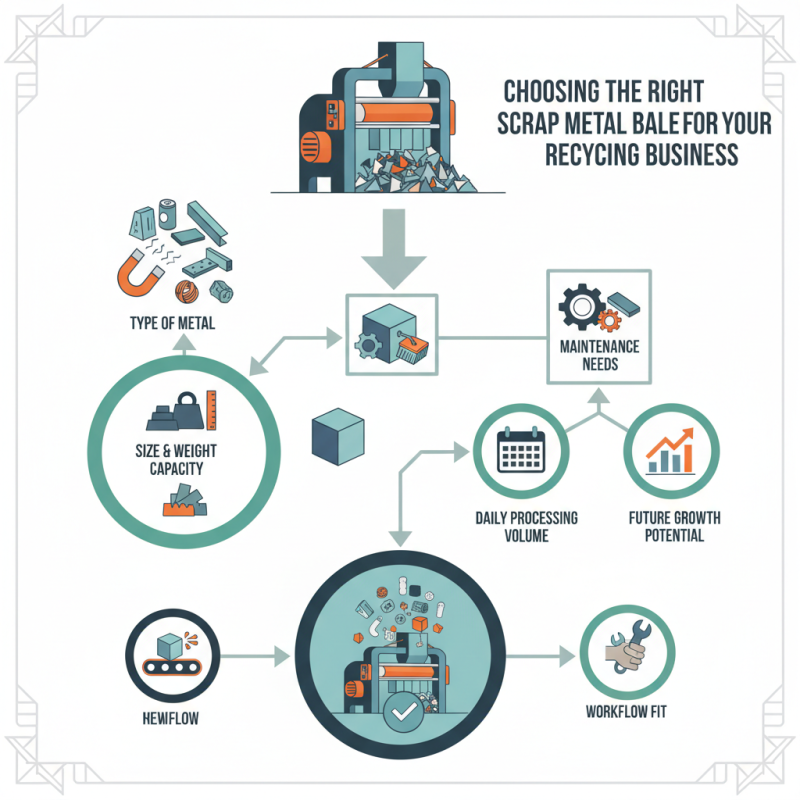
When selecting scrap metal balers, several factors come into play. First, consider the type of metal you handle. Different metals require distinct baling methods. Size and weight capacity are also essential. Not all balers can manage heavy loads, leading to inefficiency. Sometimes, it's easy to overlook maintenance needs. A complex machine may offer more features but can be harder to service.
It's important to reflect on your specific needs. Focus on how much metal you process daily. Ask yourself if you might grow in the future. Investing in a baler should align with your business plans. Scraps can vary greatly, and your choice should reflect that. Balers are not one-size-fits-all. Look for features that fit your workflow. The decision might seem daunting, but careful consideration will lead to better outcomes.
Understanding Different Types of Scrap Metal Balers Available in the Market
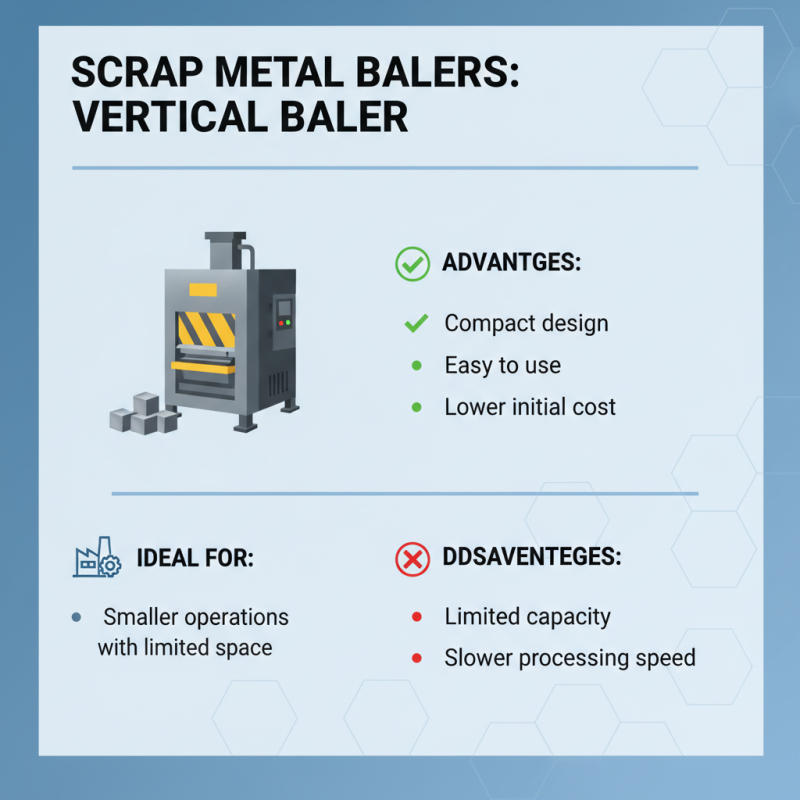
When selecting a scrap metal baler for your recycling business, understanding the different types available is crucial. There are three main categories: vertical balers, horizontal balers, and automatic balers. Vertical balers are ideal for smaller operations. They offer a compact design and are easy to use. However, their capacity is limited, which might not meet higher demand scenarios.
Horizontal balers, on the other hand, are designed for larger volumes. They are more efficient and can handle various materials. According to recent industry reports, horizontal balers can increase productivity by up to 30% compared to vertical models. However, they require more space and a higher initial investment. This can pose a challenge for some recycling businesses looking to scale.
Automatic balers streamline the process even further. They reduce labor costs and improve safety in the workplace. Yet, they may require more maintenance and could lead to potential downtime if not regularly serviced. Every type of baler has its pros and cons. Balers must be chosen based on specific operational needs, available space, and budget constraints. Each decision can impact overall efficiency and profitability.
Evaluating Key Features of Scrap Metal Balers for Efficiency and Performance
When selecting scrap metal balers, it's critical to evaluate their key features. Efficiency is paramount in maximizing output. For instance, hydraulic balers tend to produce denser bales. According to recent industry reports, higher-density bales can yield up to 30% more revenue per ton in some cases. This is essential for maintaining competitiveness in the recycling market.
Performance is another vital aspect. The speed of the baler affects turnaround time, impacting overall productivity. Many balers operate at speeds of 5 to 10 bales per hour. However, various factors like maintenance schedules and operating conditions can hinder this. Using downtime for maintenance might seem productive, but it can lead to missed revenue opportunities.
In addition, consider the size and weight capacity of the baler. As per a study by the Recycling Association, balers with a capacity range of 20-50 tons per hour are ideal for mid-sized operations. While such balers seem perfect, they can be overkill for smaller businesses. Balers that are too large can lead to inefficient use of energy. Performance metrics and regular evaluations ensure that you don’t overlook potential improvements. Balers must fit with the operational scale and efficiency goals of your recycling business.
How to Choose the Right Scrap Metal Balers for Your Recycling Business
| Feature |
Description |
Importance |
| Bale Size |
The dimensions of the bales produced, affecting transportation and storage. |
High |
| Cycle Time |
The time taken to create a bale. |
Medium |
| Hydraulic Pressure |
The pressure used for compacting materials, affecting density. |
High |
| Energy Efficiency |
The amount of energy consumption relative to output. |
High |
| Maintenance Requirements |
Frequency and type of maintenance needed. |
Medium |
| Safety Features |
Incorporated safety measures to protect operators. |
High |
| Automation Level |
Extent to which the baler operates without manual intervention. |
Medium |
| Feed Capacity |
Maximum volume of material that can be processed at once. |
Medium |
Assessing Capacity Requirements: How to Match Balers to Your Processing Volume
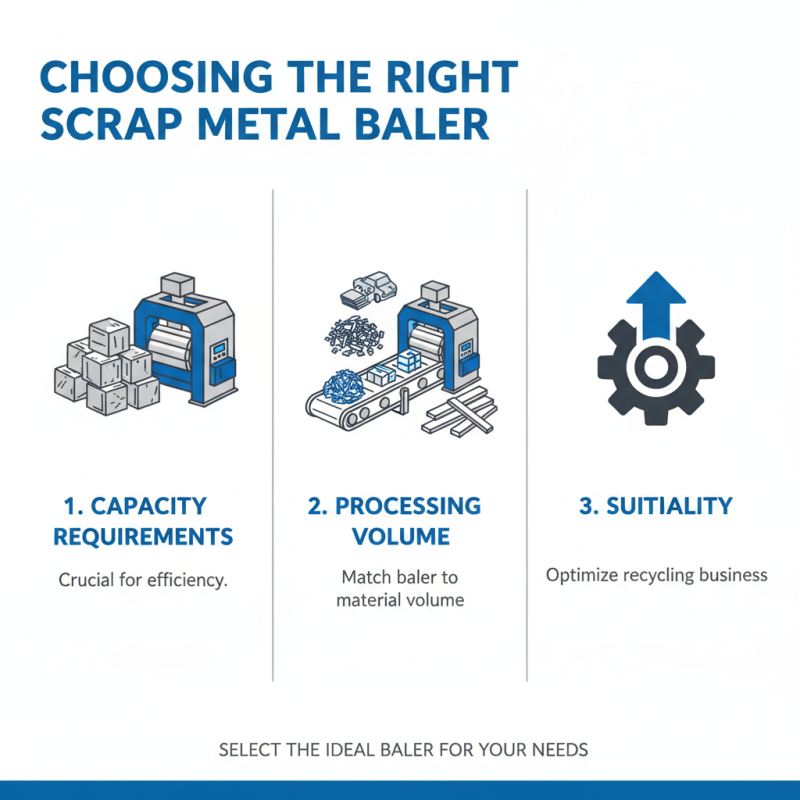
When choosing the right scrap metal baler, capacity requirements are crucial. Balers are designed to process specific volumes of materials. Understanding your processing volume will help you select the most suitable baler for your recycling business.
Tip: Calculate the daily volume of metal you plan to process. Consider the size and type of metal you collect. A baler that is too small will slow down your operation. Meanwhile, an oversized baler may lead to unnecessary expenses.
Avoid the common mistake of overestimating your needs. Start by analyzing your recycling patterns. You may discover your volume fluctuates or that certain materials dominate. This insight can prevent you from investing in a machine that doesn't match your actual usage.
Tip: Monitor your throughput regularly. If you notice rapid growth, you might need a more powerful baler soon. However, if not, reassess your current setup to ensure efficiency. Balers are significant investments, and a misstep could hinder growth. Keep track of your progress to stay adaptable in your operations.
Analyzing Cost-Effectiveness: Initial Investment vs. Long-Term Savings
When selecting scrap metal balers for your recycling business, initial investment and long-term savings must be weighed carefully. The upfront cost can be high, yet efficiency and durability are crucial for success. A baler that works well may seem expensive at first but can lead to significant savings over time. Consider the energy usage. A baler consuming less power translates to lower utility bills.
Long-term savings also come from maintenance costs. Cheaper machines might require more repairs, leading to higher expenses down the line. Analyzing the longevity of parts and availability of service can help. It’s wise to estimate how often the baler will need repairs and how quickly those can be addressed. If a machine is out of order, lost profits pile up.
It’s important to reflect on your business needs. What volume of scrap do you process? Understanding this will guide your investment. Analyzing the costs without considering future demands can be a mistake. Stay informed about technological advancements. They can enhance productivity significantly. Sometimes, the best decision isn’t the most obvious one. Choose wisely.
Considering Maintenance and Support: Importance for Recycling Operations
Choosing the right scrap metal baler is crucial for a recycling business. Maintenance and support play a significant role in this decision. The recycling industry is projected to grow at a CAGR of 5.2% by 2028, according to a report by MarketsandMarkets. This growth emphasizes the importance of reliable machinery. Equipment downtime can severely impact profits. Thus, regular maintenance is non-negotiable.
Ensuring that your baler has access to quality support is equally vital. According to data from the Environmental Protection Agency, 75% of recycling facilities report equipment reliability as a top operational challenge. An inefficient baler can lead to increased operational costs and wasted resources. Operators need quick access to support services. Delays in repair can stall various operations. Investing in a baler with strong after-sales support can be valuable.
In contrast, when businesses overlook maintenance, the outcome can be detrimental. For example, poorly maintained balers can lead to safety risks for workers. This not only impacts employee morale but also incurs additional liability costs. A proactive maintenance plan can prevent such scenarios. Regular checks and repairs extend the lifespan of the equipment. Prioritizing maintenance makes a difference in profitability and safety.
Scrap Metal Balers: Maintenance and Support Considerations