Leave Your Message
China Top Scrap Baling Press Machine Supplier? This question matters when a recycling plant must control labor, storage, and transport costs. The World Bank’s What a Waste 2.0 report estimated 2.01 billion tonnes of municipal solid waste in 2016. It projects 3.40 billion tonnes annually by 2050. More material requires safer and denser handling systems.
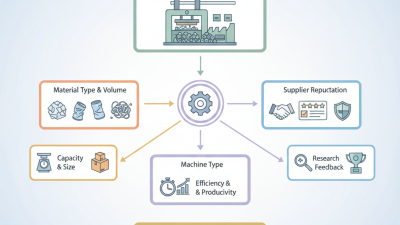
A Scrap Baling Press Machine can compress steel, aluminum, cardboard, textiles, and selected plastics into manageable bales. The right model depends on material type, moisture, bale dimensions, feeding method, and daily volume. The Global E-waste Monitor 2024 reported 62 million tonnes of electronic waste generated in 2022. It expects 82 million tonnes by 2030. This growth increases demand for controlled sorting and compaction, not simply larger hydraulic power.
A reliable Chinese supplier should provide tested specifications, traceable components, installation guidance, and responsive after-sales support. Look for verified pressure ratings, motor efficiency, cycle time, chamber size, and safety interlocks. ISO 9001 certification can support process consistency, but it does not replace machine testing. Factory audits and sample-bale trials remain valuable. Ask for actual throughput data. Marketing figures can be optimistic. Sometimes, painfully so.
This guide compares supplier capability through engineering evidence, customer experience, export performance, and service depth. It does not label one company “top” without context. A small scrapyard may need a compact vertical baler. A high-volume metal processor may require an automatic horizontal press with conveyor integration. The best choice is practical, measurable, and suitable for local operating conditions. Supplier claims should be checked before purchase.
China Top Scrap Baling Press Machine Supplier?
What Is a Scrap Baling Press Machine?
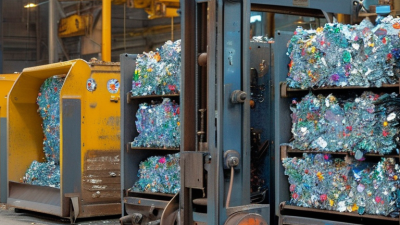
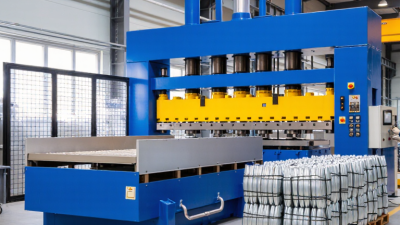
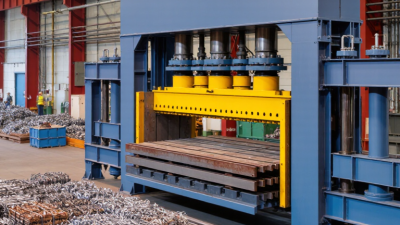
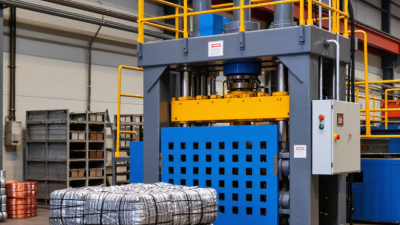
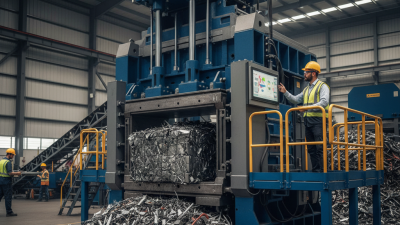
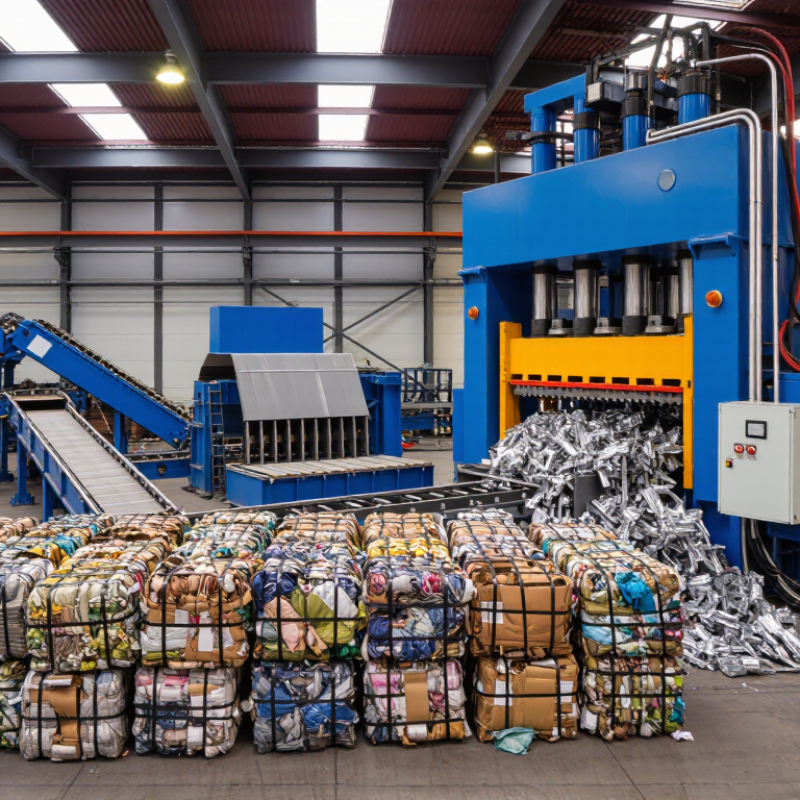
A scrap baling press machine compresses loose recyclable materials into dense, manageable bales. It commonly handles steel offcuts, aluminum cans, cardboard, and certain plastic materials. A hydraulic cylinder pushes scrap into a steel chamber. After compression, operators secure the bale with wire, strap, or suitable binding material. This reduces storage volume and simplifies transport. The World Bank’s What a Waste 2.0 report estimated 2.01 billion tonnes of municipal solid waste were generated globally in 2016. Better material density can support more efficient handling, although every facility has different requirements.
Machine performance depends on material type, moisture, chamber size, pressing force, and feeding method. Mixed scrap creates uneven bales. That matters. The Global E-waste Monitor 2024 reported 62 million tonnes of electronic waste in 2022, but only 22.3% was formally collected and recycled. Baling cannot solve sorting problems. It can, however, improve downstream handling when materials are correctly separated. A practical inspection should check hydraulic leakage, door locking, ram alignment, and emergency-stop function. A higher pressing force is not automatically better. It may increase energy use and maintenance if the feedstock is unsuitable.
Tips: Measure your daily scrap volume before selecting a chamber. Test real materials, not only clean samples. Keep prohibited or hazardous materials outside the feed stream. Ask for documented performance data, safety instructions, and maintenance intervals. Small mistakes in sorting can become expensive repairs.
| Data Dimension | Typical Information | Practical Significance |
|---|---|---|
| Definition | A scrap baling press machine is a hydraulic or mechanical machine that compresses loose recyclable materials into compact, regularly shaped bales. | Reduces material volume and makes handling, storage, transportation, and recycling more efficient. |
| Common Materials | Ferrous scrap, non-ferrous metal scrap, cardboard, paper, plastics, textile waste, aluminum cans, and light industrial scrap. | The material type determines the required chamber size, pressing force, feeding method, and bale density. |
| Main Power System | Hydraulic systems are widely used because they provide controlled, high-pressure compression and adjustable operating cycles. | Hydraulic pressure can be matched to different material loads and bale-density requirements. |
| Typical Pressing Force | Light-duty units commonly use approximately 5–30 tonnes of force, while heavy-duty scrap metal balers may use approximately 60–2,000 tonnes or more. | Higher pressing force is generally needed for dense metal scrap and difficult-to-compress materials. |
| Feeding Method | Manual loading, conveyor feeding, hopper feeding, or automated charging systems. | The feeding method affects labor requirements, throughput, workplace safety, and line automation. |
| Bale Shape | Common bale forms include rectangular, square, and cylindrical shapes. | Bale shape influences stacking stability, storage efficiency, transport loading, and downstream processing. |
| Typical Bale Weight | Depending on the material and machine size, bale weight may range from a few kilograms for small paper or textile bales to several hundred kilograms for dense metal bales. | Bale weight should match the available lifting equipment, storage area, and transportation method. |
| Bale Density | Bale density varies significantly according to material composition, moisture content, chamber dimensions, and pressing force. | Higher density normally improves space utilization but may require greater press force and stronger binding. |
| Binding Methods | Steel wire, plastic strapping, baling tape, or automatic tying systems may be used after compression. | The binding method must provide adequate strength for lifting, storage, and transportation. |
| Operating Cycle | A normal cycle includes loading, compression, bale forming, binding or ejection, and chamber preparation for the next load. | Cycle time is affected by material type, loading efficiency, hydraulic settings, and operator workflow. |
| Throughput Factors | Throughput depends on chamber volume, cycle time, material bulk density, moisture, feeding method, and operator experience. | Rated capacity should be evaluated together with the actual material and working conditions. |
| Key Machine Components | Press chamber, hydraulic cylinder, pump, motor, control cabinet, guide system, door or ram mechanism, and safety devices. | Component quality and maintainability influence operating stability, service life, and maintenance costs. |
| Safety Features | Emergency-stop controls, guarded moving parts, interlocked doors, overload protection, and clear operating procedures are important safety measures. | Safety systems help reduce risks related to crushing, unexpected movement, hydraulic pressure, and material ejection. |
| Installation Requirements | A stable floor, adequate working clearance, suitable electrical supply, ventilation, lighting, and access for material handling are generally required. | Proper installation supports safe operation and helps prevent vibration, access problems, and unplanned downtime. |
| Maintenance Requirements | Routine tasks include hydraulic-fluid inspection, leak checks, lubrication, filter replacement, electrical inspection, and cleaning of the compression chamber. | Regular maintenance helps maintain pressing performance and extends the service life of wear components. |
| Selection Criteria | Consider material type, hourly volume, desired bale size, required density, available floor space, labor level, automation, and local electrical conditions. | Matching the machine to the application is more important than selecting a press solely by maximum force. |