2026 Best Automatic Metal Baler for Efficient Scrap Processing?
In the world of scrap processing, efficiency is key. The Automatic Metal Baler emerges as a crucial tool for industries seeking to optimize operations. This machine not only streamlines the baling process but also significantly reduces labor costs. By automating material handling, companies can focus more on core tasks.
Choosing the right Automatic Metal Baler can be challenging. Factors such as capacity, speed, and versatility play vital roles in determining the best fit for specific needs. Different models may cater to varied scrap types, ranging from aluminum to steel. Understanding these nuances is essential for maximizing productivity.
Investing in an Automatic Metal Baler involves careful consideration. Businesses must evaluate their processing volume and types of materials. It’s important to reflect on cost versus efficiency. A well-chosen baler can lead to significant savings and increased throughput. However, the wrong choice may hinder operations. Thus, careful research and introspection are necessary before making a decision.
Overview of Automatic Metal Balers in Scrap Processing
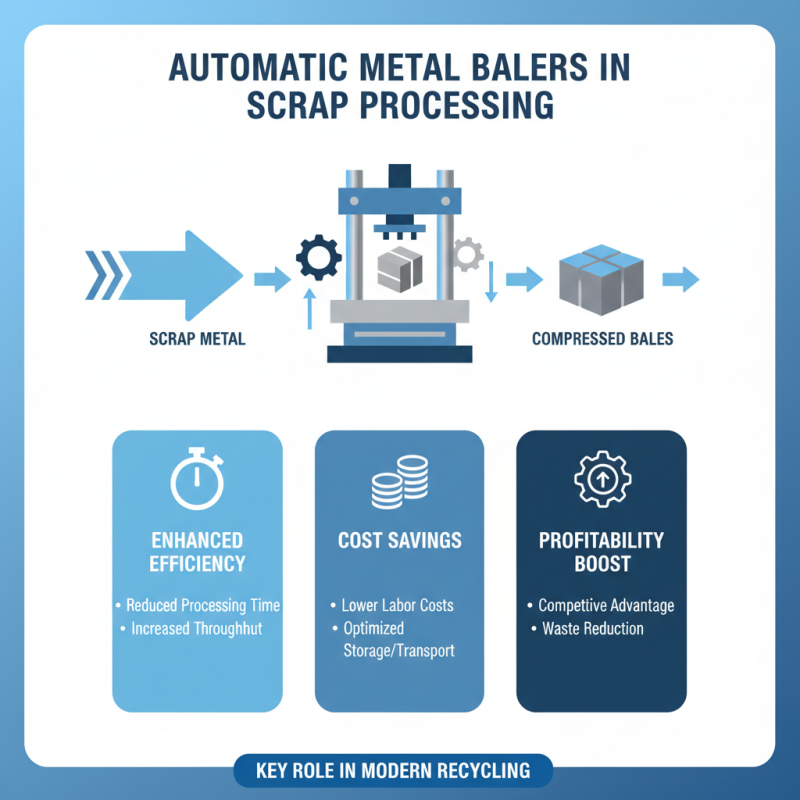
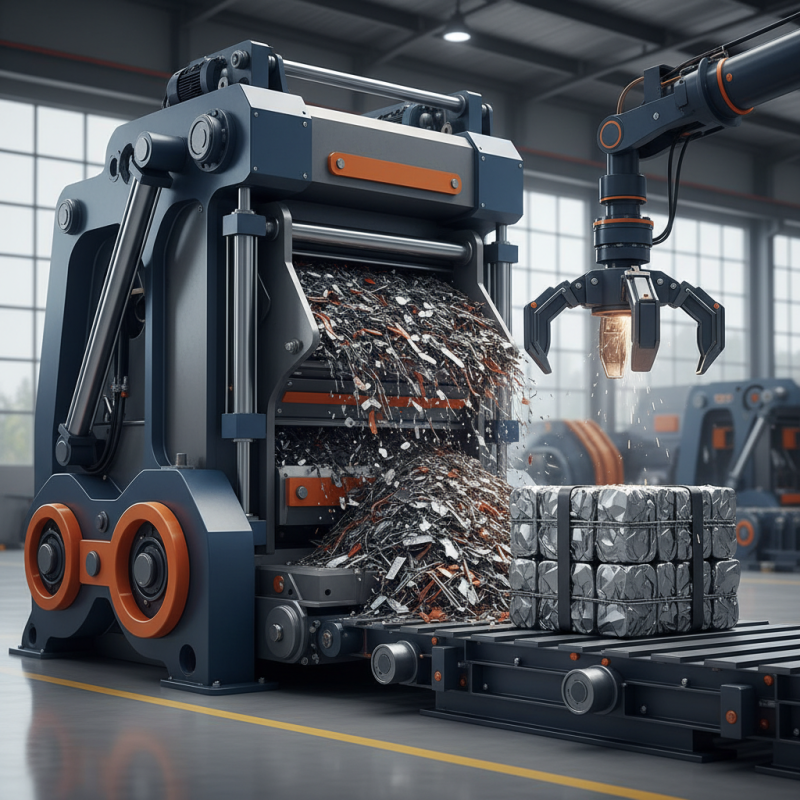
Automatic metal balers play a crucial role in scrap processing. These machines compress scrap metal into bales for easier transportation and storage. Their automation features enhance efficiency, reducing labor costs and processing time. In a competitive market, optimizing scrap processing is vital for profitability.
These balers vary in specifications, sizes, and capacities. Operators must consider their unique needs when selecting a baler. Factors such as throughput and metal types can influence the choice. Effective training ensures that operators understand the machine's complexities. Proper maintenance is essential to prevent breakdowns, which can impede production.
Despite the advantages, challenges exist. Not all materials are suitable for baling, and mixed metals may complicate the process. Operators must be aware of the limitations of their equipment. Continuous evaluation of operational efficiency helps identify areas for improvement. Adaptability in processing methods can lead to better outcomes in this ever-evolving industry.
Key Features to Consider When Selecting an Automatic Metal Baler
When selecting an automatic metal baler, understanding key features is crucial. One major aspect is the baler's throughput capacity. Industry data shows that a baler with a higher tonnage per hour improves efficiency, reducing labor costs. Modern balers can handle up to 20 tons per hour, making them essential for large-scale operations. The design should also allow for quick and easy maintenance, as downtime can be costly.
Another important consideration is the baler's size and footprint. Compact models are ideal for facilities with limited space, yet they still provide robust performance. Furthermore, automated feeding systems are recommended for consistency. In a report by the Recycling Industry Association, around 30% of waste management facilities reported efficiency losses due to manual loading.
Additionally, energy efficiency is increasingly significant due to rising energy costs. Some automatic balers now feature energy recovery systems, which can reduce operating costs over time. However, it is essential to evaluate the return on investment. Not all models may deliver the promised energy savings, leading to potential regret in purchasing decisions. It’s a balancing act—considering both upfront costs and long-term savings is necessary for effective scrap processing.
Top Brands and Models of Automatic Metal Balers for 2026
The automatic metal baler market is evolving rapidly. In 2026, the focus is on efficiency and compactness. Businesses seek machines that can handle various scrap types. Selecting the right model significantly impacts operational productivity.
Several brands have made a name by producing robust and reliable equipment. These machines are designed to compress metal efficiently. The latest models ensure swift operation and user-friendly interfaces. Features like adjustable settings enhance adaptability for different metal types.
While many options exist, not every machine suits every facility. Some users report challenges with machine calibration. Regular maintenance is crucial for optimal performance. Understanding these factors can lead to better choices in the bustling recycling industry.
2026 Best Automatic Metal Baler for Efficient Scrap Processing
| Model |
Processing Capacity (tons/hour) |
Bale Size (LxWxH in mm) |
Power Requirement (kW) |
Weight (kg) |
Features |
| Model A |
5 |
1200 x 800 x 700 |
50 |
2000 |
Automatic Loading, Safety Features |
| Model B |
7 |
1500 x 900 x 800 |
75 |
2500 |
High Efficiency, User-Friendly Interface |
| Model C |
8 |
1600 x 1000 x 900 |
80 |
3000 |
Advanced Control System, Multi-Project Handling |
| Model D |
6 |
1400 x 850 x 750 |
60 |
2200 |
Compact Design, Low Maintenance Cost |
Benefits of Using Automatic Metal Balers in Scrap Metal Operations
Automatic metal balers have revolutionized scrap metal operations.
These machines improve efficiency while reducing labor costs significantly. According to recent industry reports, automatic balers can boost output by up to 40%.
This increase enhances profitability for scrap processing facilities.
The automation of the baling process minimizes human error. A study showed that operational mistakes decreased by approximately 30% when using automatic systems.
Moreover, these machines often produce uniformly sized bales. This uniformity simplifies transportation and storage, resulting in lower logistics costs.
However, implementing automatic balers also poses some challenges. Initial investment can be substantial for smaller operations.
Training staff to operate these machines is essential. Some employees may resist transitioning to automated systems. Addressing these concerns is vital for maximizing the benefits of automatic balers.
Overall, they offer significant advantages for scrap processing when managed effectively.
Future Trends in Automatic Metal Baler Technology and Efficiency
The landscape of automatic metal baler technology is evolving rapidly. Predictions indicate that by 2026, these machines will be more efficient and user-friendly. Industry reports suggest a significant shift towards incorporating AI and IoT. These technologies enable real-time monitoring and predictive maintenance, which can reduce downtime by up to 30%.
Efficiency metrics are crucial in assessing new balers. Modern designs focus on energy consumption and cycle times. Companies leveraging automation see an increase in throughput by as much as 25%. The integration of smart sensors has the potential to streamline operations. However, implementation can be challenging and may require workforce training.
Tips: Regularly assess the efficiency of your balers. Look for trends in maintenance needs. Consider upgrading older systems if they frequently underperform. Tracking these metrics can facilitate better decision-making in the long run. Balancing cutting-edge technology with personnel skills is essential for sustainable operation.